
Remember the movie Moneyball? You had the old-school baseball scouts, sitting in the stands, talking about a player's "good face" and the "sound the ball makes off his bat." They were trading on gut, vibe, and tradition. Then Jonah Hill's character walks in, looking like he's never held a baseball, and upends a century of tradition with one nerdy concept: sabermetrics. He didn't care about a beautiful swing. He cared about one cold, objective stat: on-base percentage.
For the last 80 years, every one of us in marketing, branding, and advertising has been an old-school scout. We've been selling the sizzle, the vibe, the brand story, the feeling. We designed logos, wrote jingles, and bought Super Bowl ads, all to appeal to the beautiful, messy, irrational gut of a human consumer.
Well, the game just changed. E-commerce traffic from AI agents just saw a 4,700% increase year over year. That isn't a typo. That's Jonah Hill walking into the room, tapping on his laptop, and showing us a new player taking 47 times more at-bats than last year.
That new player is the AI agent. And just like in Moneyball, it doesn't care about your vibe. It only cares about on-base percentage. Welcome to the new league. The age of agentic commerce is here, and we're all about to get our gut feelings handed to us.
The new battlefield: marketing to a JSON file
But what actually is agentic commerce? Let's walk through a scenario.
The old way (last year): Sarath wants running shoes. He goes to Google, searches "best running shoes," gets served a dozen ads, clicks a blog, then gets retargeted on Instagram by a slick video of a marathon runner crossing the finish line. He feels inspired. He goes to the brand's website, likes the colour blue, and buys the shoes that look fast. Your job as a marketer was to persuade Sarath. You won by having the best ad, the slickest video, the most emotionally resonant story.
The new way (right now): Sarath, tired of all that, tells his personal AI assistant, "Hey, buy me new running shoes." But here's the catch. A month ago, Sarath set his agent's global preferences:
{
  max_price: "$120",
  min_review_score: 4.5,
  shipping: "24-hours_max",
  sustainability_pref: "recycled_materials"
}
Your AI agent doesn't browse the web. It doesn't watch your five-million-dollar ad. It sends out a query. It pings the APIs of a hundred retailers and asks one cold, logical question: give me your product data that matches these parameters.
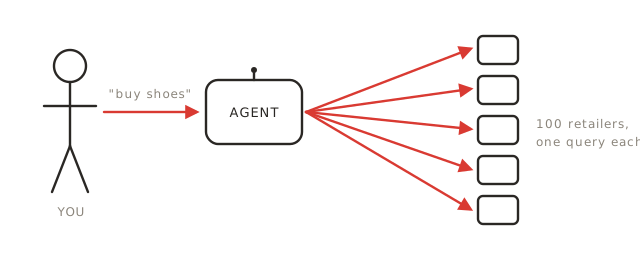
Your inspirational marathon video? The agent can't see it. Your beautifully designed logo? It can't parse it. Your catchy slogan? Not a queryable data point. If your product's data is { "price": "$130", "shipping": "3-5_days", "sustainability": null }, you are filtered out. It's not that you lost the sale. You were never even invited to the game. You didn't make the shortlist. Your brand has become invisible, not because it's uncool, but because it's un-queryable.
Agentic commerce is the fundamental shift from marketing-by-persuasion to marketing-by-permission.
The three levels of the agent takeover
This isn't a distant sci-fi future. According to analysts at places like McKinsey, it's happening now, in three distinct stages.
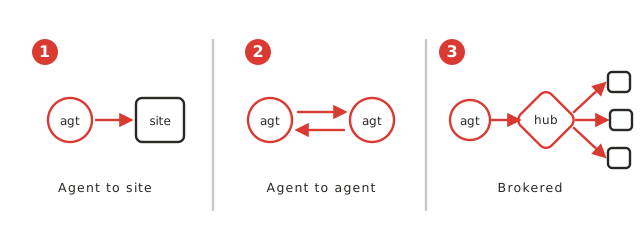
1. Agent-to-site
The simple version. Your personal AI agent goes to a site like Amazon or Expedia and acts as a super-fast, hyper-logical filter for you. It's the bouncer at the club door, checking your data against its list.
2. Agent-to-agent
Where it gets wild. Your personal shopping agent starts talking directly to a retailer's sales agent. Yours says, "My human wants these shoes." Theirs replies, "The price is $120." Yours, knowing your entire purchase history, fires back: "This user is a loyalty member and their birthday is next week. Offer 20% off or I'll query your competitor." All of it happens in milliseconds, with zero human involvement.
3. Brokered agent-to-site
The new Google. An intermediary platform emerges whose entire job is to be the trusted source for agents. It aggregates and verifies product data, becoming the central, objective database of truth for all AI shoppers.
Your job as a marketer, product manager, or brand strategist is no longer just search engine optimisation, or even GPT engine optimisation. It's now agent optimisation.
The new playbook
So the old scouts are fired, and you've just been hired as the new data analyst. What's the job description?
For marketers and advertisers: your new creative is an API
Your most important creative is no longer the full-page ad in Vogue. It's your product's JSON file. Your ability to tell a brand story is now your ability to translate that story into machine-readable, objective facts.
Old: "We are a trusted, eco-friendly brand."

New: {
  "trust_rating": "4.8/5.0",
  "sustainability": "b-corp_certified",
  "materials": "100%_recycled"
}
Your job is to make your brand's data perfectly clean, structured, and accessible. Your new best friend is no longer the creative director, but the back-end developer.
For product managers: you now have two users
You've always focused on the human user. You now have a second, equally important one: the agent user. Is your product agent-ready? Can an AI agent easily find your price, inventory, specs, and shipping times? If your API is slow, clunky, or hidden, you don't exist. Your API is no longer a feature. It's your new storefront.
For branding and comms: trust is now objective
Brand trust is no longer a feeling you create with soft-focus ads. It is a measurable, verifiable score. Agents look for objective proof. Online reviews, on-time shipping percentages, supply-chain transparency, customer service response times: these are no longer just operations. They are your new brand identity.
For consultants: this is your new transformation pitch
Forget digital transformation, that's over. The new pitch is agentic readiness. You're now the Peter Brand of commerce, walking into the CEO's office to explain that their hundred-million-dollar marketing budget is useless if their product data isn't clean. The businesses that win the next decade aren't the ones with the best ads, but the ones with the best, most truthful data.
The 4,700% increase isn't a warning. It's the game horn. The game has changed, the rules are new, and the gut-feel players are about to be sent back to the minor leagues. Stop selling the sizzle. Start optimising the spec sheet.